

 Dominic Knight
November 23, 2026
Blyth Valley and Southwold Wildlife Group: November report
The Wildlife of the Brecks
The Southwold and Blyth Valley Wildlife Group welcomed Alex Bass to talk about the wildlife and landscape of the Brecks, a 370-square-mile area of sandy heathland straddling parts of Suffolk and Norfolk south of Thetford. The Ice Age left the Brecks with underlying chalk geology overlain with sandy soils. It is a harsh environment, experiencing extremes of both heat and cold, with low rainfall and low organic matter. The name ‘Breck’ means a temporary field, and earlier farmers would lay areas fallow as they moved to other more productive land. In the 19th Century, ‘pine lines’ were planted as windbreaks to help farming, and in the 20th Century, the Forestry Commission planted large areas of conifers. Thetford Forest dates from this time.
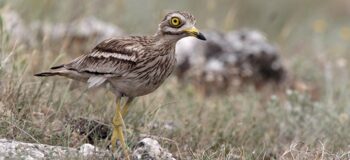
The lowland heath of the Brecks is now recognised as internationally important, and much of it is protected. There is an enormous diversity of flora and fauna to be found. The forests are home to a variety of bat species and, if you are lucky, you may see goshawks high overhead displaying their spring ritual. Rabbits keep the grasslands short, making it ideal ground for the rare stone curlews, which arrive in the spring to nest. Their success rate is encouraging their expansion, and they are seen quite regularly now on Westleton Heath. There is a wide range of localised flora, such as Breckland thyme, and an unusual orchid, the broadleaved helleborine. Woodlark and nightjars enjoy the areas of sandy grasslands and silver birches; crossbills and goldcrests are found along the woodland rides. The rare red-backed shrike, known as the ‘butcher bird’, can be seen very occasionally as a summer visitor. Many different butterfly species, such as the silver-studded blue and the grayling, are found throughout the spring and summer.
Two major nature reserves, Knettishall Heath and Lakenheath Fen, have diverse habitats to enjoy, and Lynford Arboretum is beautiful at any time of the year, but especially in spring.
The huge variety of photographs, often capturing elusive or rare species and their behaviour, was fascinating, and Alex’s enthusiasm for this unique area was inspiring.
Our next meeting is on Thursday, 14th January, at 7.30pm, at Southwold Arts Centre. John Baker will talk about Amphibians, Reptiles and Rewilding. Admission is £5, to include refreshments, and everyone is welcome.
Contact us at southwoldandblythvalleywg@gmail.com.
Penny Mansfield